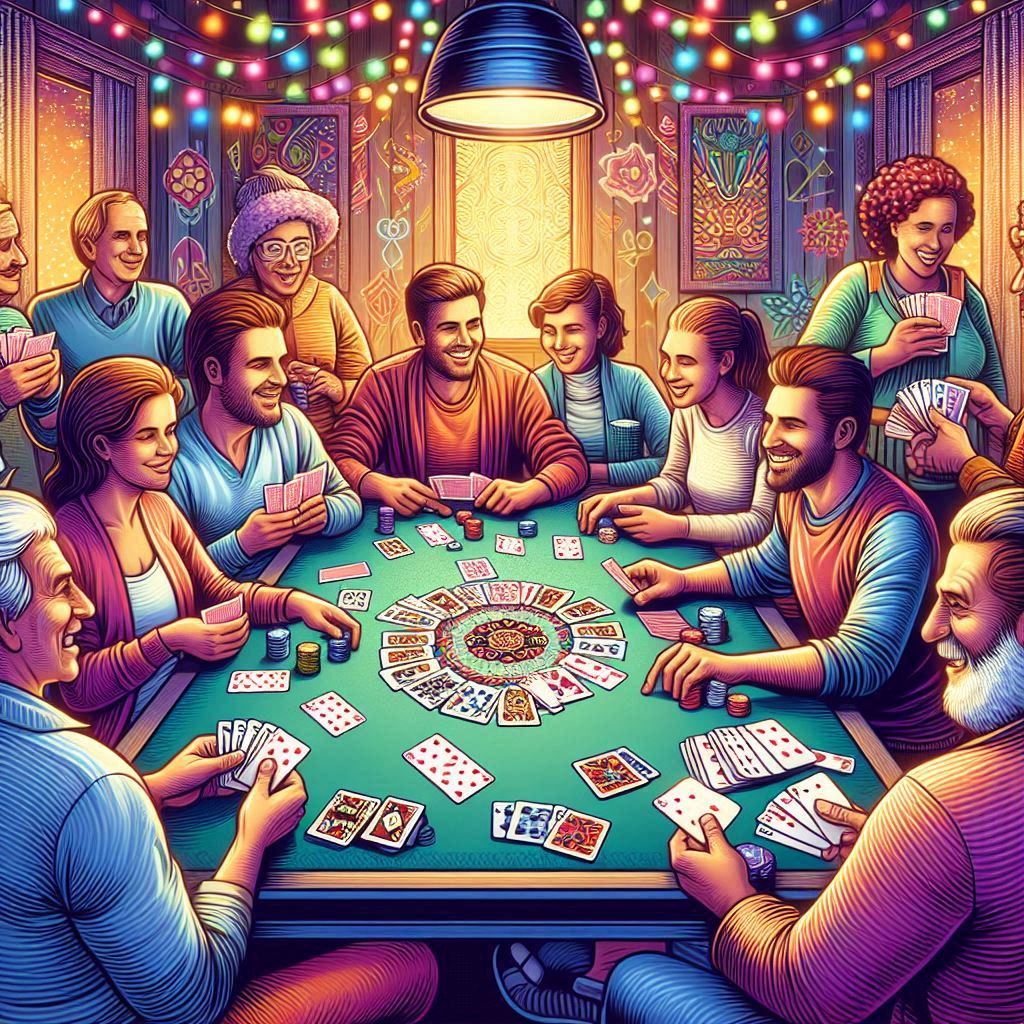
drkstraightsmile.com – Every region has its favorites. Some countries swear by traditional classics, others lean toward high-stakes casino games, and millions more spend their time in fast digital duels on mobile apps. So when someone asks “What is the biggest card game in the world?”, the real answer isn’t a simple one-title declaration. It’s a story about culture, reach, technology, tradition, and how different communities define “biggest.”
Some people measure popularity by daily active players. Others look at global tournaments, cultural longevity, or international sales. And with digital platforms reshaping how card games spread, a title that dominates in one country may be almost unknown in another. Understanding how card games work helps make sense of this — the mechanics, the player base, and how these games evolve as they travel.
So to answer the question properly, we explore the giants in every format: traditional card games, casino staples, trick-taking masterpieces, collectible card games, and online digital platforms. Each has a contender for “biggest in the world,” backed by data, history, and global influence.
How to Define “Biggest” in the Card Game World
Before naming the global champion, we need to get the criteria right. Card games dominate different arenas:
1. Most Players Worldwide
This usually determines the “true” biggest game — the one with the largest active population.
2. Cultural Reach
Games like Poker and Rummy appear in dozens of countries, languages, and variations.
3. Tournament and Competitive Impact
TCGs such as Magic: The Gathering and Yu-Gi-Oh! hold massive global tournaments with huge attendance.
4. Digital Presence
Some games explode only in their online form.
5. Longevity and Tradition
A game played consistently for centuries carries a different kind of weight.
With these factors in mind, we can approach a clearer conclusion.
The World’s Biggest Card Games by Category
Because “biggest” depends on context, we break down the winners by type — from the timeless classics to the massive digital platforms.
1. The Most Popular Traditional Card Game Worldwide: Rummy
Rummy isn’t just a game — it’s a family of games. From India to the United States, from Mexico to China, Rummy’s variations dominate homes, clubs, and online platforms.
Key titles include:
-
Gin Rummy
-
Indian Rummy
-
Canasta
-
Conquian (one of the oldest known Rummy-style games)
Across India alone, tens of millions of players engage in Rummy apps daily — a scale unmatched by most classic card formats. Even historically, Rummy has deep roots in multiple regions, which is why it appears consistently in “most played card game” lists worldwide.
Rummy’s blend of set-building, probability reading, and social interaction gives it universal appeal. Simple rules + strategic depth = evergreen popularity.
2. The Biggest Casino Card Game: Blackjack
Among casino games, there is no competition: Blackjack is the king.
Blackjack’s advantage:
-
Easy rules
-
Fast rounds
-
The lowest house edge in many casinos
-
Universal availability across all casino cultures
It is the unrivaled number-one card game in physical casinos across the U.S., Europe, and Asia. Millions of daily players make it the biggest casino card game on earth.
3. The Most Influential Competitive Card Game: Poker
If the question were “Which is the most famous card game?”, Poker would win instantly.
Poker’s global footprint includes:
-
The World Series of Poker (WSOP)
-
Online poker platforms
-
Countless regional variations
-
Television influence
-
Cultural reach across movies, books, and gaming
More importantly, Poker is played in nearly every country on the planet — from casual home games to high-stakes tournaments. Its strategic depth makes it a lifelong pursuit for serious players.
While not the single biggest game by player count, Poker is the most influential card game ever created.
4. The Biggest Trick-Taking Game: Bridge
When it comes to pure intellectual card gaming, Bridge dominates globally.
Competitive Bridge has:
-
International federations
-
World championships
-
Hundreds of thousands of serious players
-
Historical prestige
As noted in documented sources, Bridge emerged from older trick-taking traditions like Whist and became globally standardized in the early 20th century .
Even though it’s not as massive as Rummy among casual gamers, Bridge holds the title for the most serious, organized competitive card game in history.
5. The Biggest Single-Player Card Game: Solitaire (Klondike)
Thanks to every Windows PC in the 90s and 2000s, Solitaire (especially Klondike) became one of the world’s most played games — period.
This wasn’t just millions of players; this was billions of computers running the same game, making it part of the global computing experience. The origins of Klondike likely date to the early 1900s, but its explosion came with Windows inclusion in 1990s software packages, which multiplied its reach .
If counting single-player card games alone, Solitaire is the world heavyweight champion.
6. The Biggest Trading Card Game: Pokémon TCG
In the realm of TCGs/CCGs, there are three giants:
-
Magic: The Gathering
-
Pokémon TCG
-
Yu-Gi-Oh!
However, Pokémon TCG leads the category with:
-
The highest lifetime sales
-
Global brand dominance
-
Massive digital and physical player communities
-
Multi-generation appeal
Launched in Japan in 1996 and still expanding, Pokémon TCG remains unmatched in worldwide cultural reach and sales volume .
7. The Biggest Digital-Only Card Game: Hearthstone
When the digital-only category is considered, Hearthstone takes the crown.
It combines:
-
Online accessibility
-
Competitive esports tournaments
-
Lower learning curve compared to MTG Arena
-
Huge player bases across PC and mobile
Released in 2014, Hearthstone revolutionized digital card gaming and influenced new titles like Legends of Runeterra .
8. The Biggest Card Game in Asia: Big Two (Deuces)
In terms of sheer popularity across East and Southeast Asia, Big Two dominates.
Countries where it thrives:
-
China
-
Hong Kong
-
Singapore
-
Malaysia
-
Philippines
-
Taiwan
-
Vietnam
It is fast, competitive, and deeply embedded in social culture — especially during festivals and gatherings. Big Two’s rules and climbing mechanics make it engaging and replayable at all levels.
So… What Is The Biggest Card Game in the World?
Here’s the layered, accurate answer:
By worldwide player numbers (physical + digital):
⭐⭐ RUMMY — The global king of traditional multi-player card games
Driven by enormous player populations across India, China, and the West.
By casino popularity:
⭐⭐ BLACKJACK — Universal casino dominance
By cultural influence & global fame:
⭐⭐ POKER
By competitive structure:
⭐⭐ BRIDGE
By single-player numbers:
⭐⭐ SOLITAIRE (Klondike) — billions of players over decades
By trading card community:
⭐⭐ POKÉMON TCG
By digital-only games:
⭐⭐ HEARTHSTONE
Each one is the biggest in its domain. But if forced to pick one answer based purely on global participation, Rummy edges out every format.
Why Rummy Holds the Top Spot
Rummy wins for several reasons:
1. Universally Accessible
Easy rules, fast rounds, and social appeal across cultures.
2. Dozens of Variations
Gin Rummy, Indian Rummy, Canasta, and Conquian form a massive interconnected ecosystem.
3. Huge Online Market
Mobile Rummy apps in Asia alone attract staggering daily player counts.
4. Cultural Longevity
Documented as a major classic game internationally .
5. Cross-Generational Appeal
Kids, elders, casual players, and card experts all pick it up easily.
Rummy’s adaptability makes it the closest we have to a global default card game.
So, what is the biggest card game in the world?
Different games dominate in different arenas, but across all measures — cultural reach, player count, accessibility, and global adoption — Rummy stands out as the most played traditional card game worldwide.
The “biggest” card game changes depending on what you measure:
-
Rummy for global participation
-
Blackjack for casinos
-
Poker for cultural impact
-
Bridge for organized competition
-
Solitaire for single-player reach
-
Pokémon TCG for trading card dominance
-
Hearthstone for digital CCGs
And together, these games show how massive and diverse card-game culture truly is.